
CBIS Spotlight: Jay Waller, PT, DPT, CBIS
Categories: ACBIS Insider
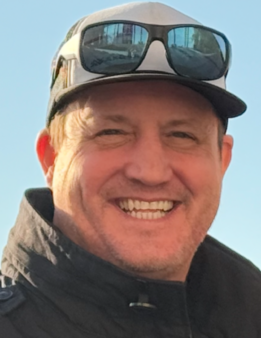 Jay Waller, PT, DPT, CBIS, is a physical who lives in Old Lyme, Conn., with his 9-year-old daughter Shea and partner Jen. He earned a B.A. in psychobiology/pre-med from Yale University, an Associate of Applied Science and Paramedicine from the State University of New York, and a Doctor of Physical Therapy from the University of Hartford.
Why have you chosen a career in brain injury?
I chose a career in physical therapy after my lifelong dream of becoming an orthopedic surgeon was shattered by a traumatic brain injury (TBI). In 1996, I was the victim of a racial road rage assault while vacationing in Hawaii. The attack left me in a month-long coma with skull fractures, right-sided paralysis, and a severe frontal lobe TBI with lifelong cognitive and executive function deficits.
After learning to walk, talk, and regain my independence, I believed I had recovered and attempted medical school in 1998. I quickly realized I could not succeed through the rigorous curriculum and was forced to withdraw. I spent years trying to rebuild my life, working in sales because of my outgoing personality, but my invisible disability led to poor decisions, repeated job losses, and failed relationships. I felt lost and didn’t understand why.
Seven years after my injury, I finally found the help I needed. It should not be overlooked, the perpetual support from family and friends is paramount to the recovery process. Through a Yale roommate who was a neuropsychologist, I was introduced to an intensive cognitive rehabilitation program that I refer to as “Brain Camp,” which changed my life. After more than two years in the program, I finally: 1) realized I had a frontal lobe severe brain injury, 2) accepted that the injury would be with me forever and never go away, 3) learned how to help compensate for my lifelong limitations with the learned behaviors of utilizing tools, coaches, and strategies including “self-talk,” plus staying in the moment and being present always, which is extremely difficult.
That journey gave me both purpose and direction. I realized I wanted a career devoted to helping others regain function and independence, which led me to earn my national paramedic license, become a Firefighter I, and ultimately pursue my Doctor of Physical Therapy degree. My own rehabilitation showed me the life-changing impact therapy can have, and I wanted to provide that same hope to others.
Although physical therapy is my profession, brain injury advocacy is my purpose. I am deeply committed to supporting brain injury survivors and their families, advocating for greater awareness, and sharing my experiences to help others understand that recovery is a lifelong journey. Helping others navigate the challenges of brain injury has become one of the most meaningful purposes in my life. My greatest hope is to use both my clinical training and my lived experience to help others realize that recovery doesn’t end; it evolves.
How has the field of brain injury changed in your time working?
We are learning more and more every day about the brain and its incredible power. Although many of its differing actions/responses do vary from person to person (making it even more of a medical mystery), researchers continue to find connections. Without a doubt, knowledge and awareness are paramount to creating more prevention and being more proactive with an individual’s approach to improved brain health.
Why is having a CBIS important to you? How is it helpful in your daily work?
I feel empowered to be a CBIS practitioner. I feel so lucky to be a high-level survivor and still have the ability to educate others on the physiological components of TBI. Living with its struggles for 30 years enables me to relate to all that medicine is discovering, but, also, I am able to add a personal touch when working with others who have been affected by brain injuries.
What are some challenges you have faced working with individuals with brain injury?
Well, this is a difficult question to answer as every TBI survivor has a different set of impairments that are particular to their injury specifics as well as their pre-injury skill sets, including education and cognitive abilities. Certainly, all people benefit from repetition and structure, but the survivor has to be willing and able to slow their thinking down enough to be able to create a structure that can be learned and repeated for success. A TBI survivor must be aware that something is “wrong” to even begin their appropriate rehabilitation. For example, I find that being a severe TBI survivor with many years of intensive cognitive rehabilitation under my belt, I have been able to slow myself down and surround myself with understanding, positive people and coaches who are patient and individuals I trust.
Another big struggle that I still suffer from and that I see in other survivors is their lack of confidence and fear of making mistakes and wrong decisions. This fear can actually paralyze a survivor; we become frozen and flustered and end up becoming adynamic, and just sit there creating more inner turmoil. In addition, there is also the constant fear of becoming flooded with emotional or psychological stimuli. That can lead to outbursts, or worse, inappropriate verbiage and/or behavior.
How can clinicians best support individuals, caregivers, and family members?
As both a brain injury survivor and a clinician, I’ve learned that the best way to support a survivor is to provide calming, positive feedback and always focus on what they can do, reassuring them that it is going to be okay, no matter how small their successes may seem. Simplification, along with patience and a calm approach, is incredibly important for both the survivor and the clinician. Providing ongoing encouragement and praise is rewarding, regardless of how trivial the achievement may appear.
I also try to create an atmosphere that is conducive to listening and free from distractions for both the survivor and the rehabilitation team. One of the biggest hurdles in TBI rehabilitation is that many of the injury’s effects are invisible to those who have never experienced them. No two brain injuries are alike, and every survivor must be approached based on their unique needs. Being patient, calm, reassuring, and positive is essential for productive and meaningful rehabilitation, no matter how small the steps or how frustrating the journey. One day, one moment at a time!
What do you see as the future of the brain injury field?
I see much more medical knowledge and rehabilitative ideas helping to drive structured learning to improve cognitive instruction. The future of the brain injury field lies in advancing medical research and expanding access to evidence-based cognitive rehabilitation and education. As our understanding of brain injury continues to grow, rehabilitation should focus not only on physical recovery but also on helping individuals understand and manage the cognitive, behavioral, and emotional challenges that can persist throughout life, even when the injury is invisible to others.
Programs that provide intensive cognitive rehabilitation have the potential to be life-changing by increasing self-awareness, teaching practical coping strategies, and empowering individuals to lead meaningful personal and professional lives. Greater awareness, earlier intervention, and broader access to these programs could help many people avoid years of unnecessary struggle and reach their full potential sooner.