
CBIS-AP Spotlight: Elizabeth DuBose
Categories: ACBIS Insider
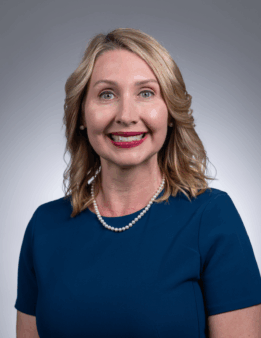 Elizabeth DuBose, DPT, CBIS-AP, is an administrator at Prisma Health Roger C Peace Rehabilitation Hospital and Kidnetics in Greenville, S.C.
Why have you chosen a career in brain injury? Why are you passionate about brain injury?
My journey into brain injury care began at the bedside. As a young physical therapist in the outpatient brain injury program, I witnessed firsthand the resilience of patients and families navigating the most challenging chapters of their lives. What struck me was not just the complexity of recovery, but the courage it demanded—every word relearned, every step regained was a triumph of hope over uncertainty. That experience changed me. I realized brain injury isn’t just a medical condition; it’s a life-altering event that ripples through families and communities. I chose this path because I wanted to be part of restoring independence and dignity, and because I believe every person deserves the chance to reclaim their story.
Today, my work extends far beyond the walls of the hospital. I advocate for resources, lead initiatives, and help build programs that ensure survivors have access to the care and support they need—not just in the immediate aftermath, but throughout their lifelong journey. My commitment to this cause has taken me to the state level, where I’ve served as Chair of the South Carolina Brain Injury Leadership Council and as Past President of the South Carolina Brain Injury Association.
Brain injury can happen to anyone, at any time—and when it does, they deserve a system ready to respond with expertise, compassion, and hope. That belief drives everything I do. For me, this isn’t just a profession; it’s a calling. Every patient, every family, every story reminds me why this work matters.
How has the field of brain injury changed in your time working?
When I first started in brain injury rehabilitation, care could be siloed—and patients often stayed in each level of care for much longer periods. Back then, recovery was measured in months or even years within the same setting.
Today, the pace is dramatically different. Patients move quickly through acute care, inpatient rehab, and outpatient services, which means every moment counts. This shift has required us to rethink how we deliver care. We now understand that recovery is most successful when it’s truly interdisciplinary, with teams collaborating seamlessly around the patient and family. That means breaking down silos, sharing information in real time, and creating a unified plan that follows the patient across every level of care.
Alongside this, technology and research have transformed what’s possible. Robotics, virtual reality, and advanced neuroimaging allow us to personalize treatment and track progress in ways we never imagined.
And perhaps most importantly, our mindset has evolved—from focusing solely on survival to prioritizing quality of life: reintegration into work, community, and meaningful roles. It’s been incredible to witness this evolution. Every advancement reminds me why this work matters: because behind every innovation is a person fighting to reclaim their life.
Why is having a CBIS-AP important to you? How is it helpful in your daily work?
Earning my CBIS-AP was important because it represents a commitment to excellence in brain injury care. This credential isn’t just a title—it signifies advanced knowledge and best practices that allow me to lead with confidence and credibility. Brain injury rehabilitation is complex, and having this certification ensures I’m grounded in the latest evidence-based approaches, which is critical when guiding teams and shaping programs.
In my daily work, it helps in two ways: first, it gives me a deeper understanding of the clinical challenges our patients face, so I can advocate effectively for resources and innovations. Second, it builds trust—among staff, patients, and families—because they know our leadership is rooted in expertise. For me, CBIS-AP is about raising the standard of care and ensuring that every decision we make reflects the best possible outcomes for survivors.
What are some challenges you have faced working with individuals with brain injury?
One of the greatest challenges is the unpredictability of recovery. No two brain injuries are alike, and progress can be slow and nonlinear. That can be emotionally taxing for patients and families—and for clinicians who want to see immediate results.
Another challenge is addressing the invisible aspects of brain injury, like cognitive fatigue or personality changes, which are often misunderstood by employers, friends, and even loved ones. These changes can affect relationships, employment, and independence in ways that aren’t always obvious.
On top of that, resources vary dramatically from state to state, and navigating systems for rehabilitation, financial support, and community services can feel overwhelming for survivors and caregivers. These complexities require patience, creativity, and constant advocacy—not just for the patient, but for the entire family system.
How can clinicians best support individuals, caregivers, and family members?
Clinicians are not just treating a patient—they’re supporting an entire family system. The best thing we can do is listen deeply and educate consistently. Families need to understand what recovery looks like, what resources are available, and that progress takes time. Empathy is key, but so is empowerment: giving caregivers tools, connecting them to support networks, and reminding them they’re not alone. When clinicians create a partnership with families, outcomes improve—not just physically, but emotionally.
What do you see as the future of the brain injury field/research/education?
The future is incredibly exciting. We’re moving toward precision rehabilitation—using neuroimaging, AI, and data analytics to tailor interventions to each individual’s brain. Technology like robotics and virtual reality will continue to expand access and engagement.
I also see a growing emphasis on lifelong support, recognizing that brain injury is not a short-term condition but a journey. Education will evolve to include more interdisciplinary training and trauma-informed care, ensuring clinicians are prepared to address both the science and the human experience of brain injury. Ultimately, the future is about innovation with compassion—leveraging technology while never losing sight of the person behind the injury.
Are you involved with BIAA or ACBIS in other ways (for instance, as a fundraiser or Board member)?
Yes, I’ve had the privilege of partnering with BIAA and ACBIS beyond certification. One of the most rewarding experiences was teaching a course called The Conscious Therapist – Mindfulness Applied alongside two incredible leaders in the field, Dr. Sheldon Herring, PhD, and Marty Van Dam, CCC-SLP, ACBIS Board of Governors. This course was part of the Brain Injury Leadership Academy, which was established by Dr. Herring, a former BIAA board member and ACBIS Board of Governors member. That collaboration was powerful because it blended clinical expertise with mindfulness strategies, helping clinicians bring presence, self awareness, and compassion into their practice. It was exciting to learn and grow with other leaders who share the same passion for advancing brain injury care. Opportunities like this remind me that education is not just about sharing knowledge—it’s about creating a community of professionals committed to innovation and excellence. I look forward to continuing to contribute through teaching, advocacy, and leadership.