
Robert Poulson
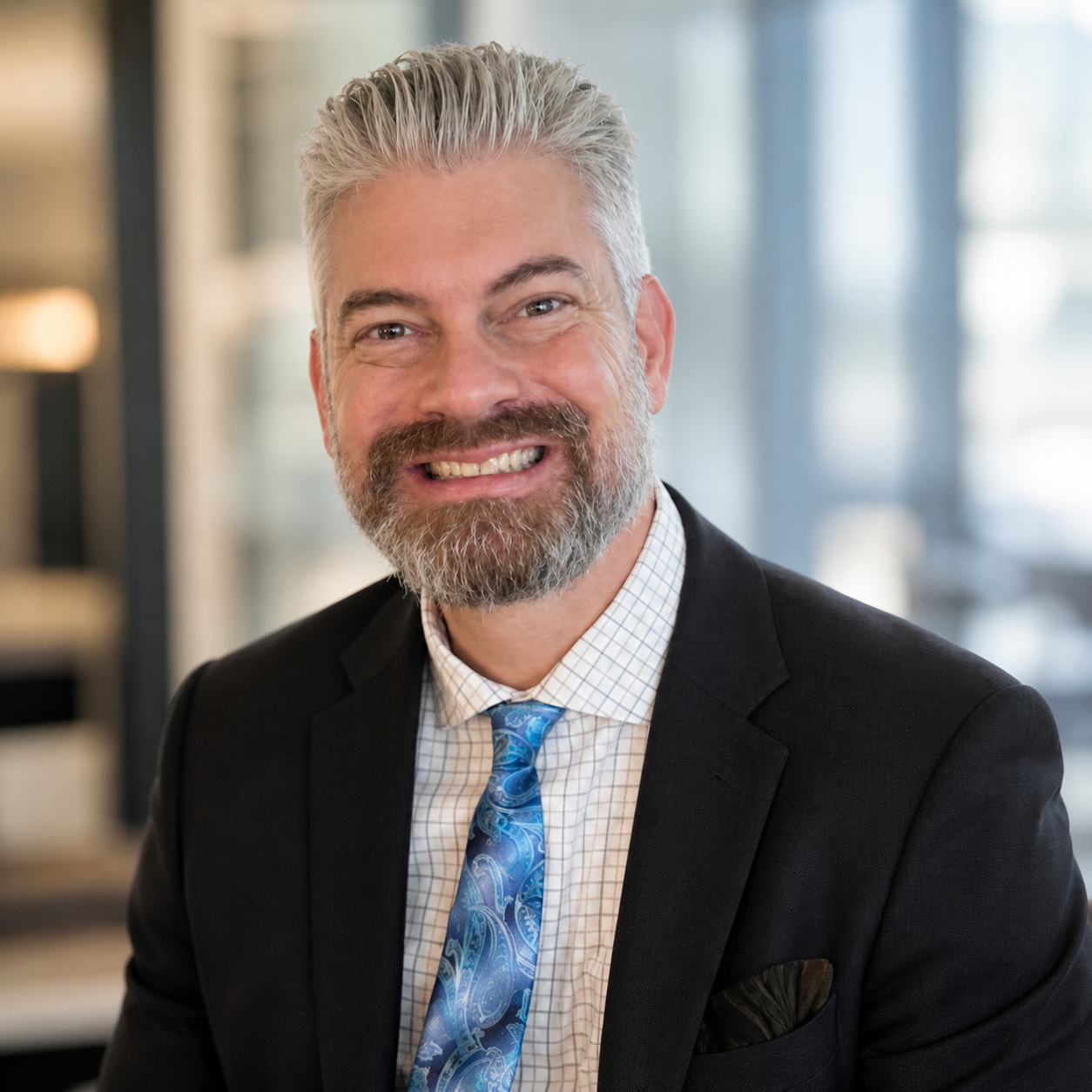
One word I would use to describe my brain injury journey is: persistence.
I was three years old when I suffered a serious brain injury. I was later found to have a subdural hematoma, bleeding inside the skull that put pressure on the right side of my brain. I had brain surgery to remove the blood and spent time in the hospital, followed by months of rehabilitation.
Because the injury affected the right side of my brain, the left side of my body was impacted. My left arm, wrist, hand, and leg were affected. As a child, my left arm and hand were much worse than they are today. I had therapy, rehabilitation, and later hand surgery when I was in high school to improve the use of my hand. The surgery helped me open my fingers while keeping my wrist straighter, but the original limitation has always remained.
Today, at 48 years old, I still live with the effects of that brain injury. My left hand and wrist have limited range of motion. I have weakness, stiffness, poor motor control, and learned non-use from years of adapting. I cannot type normally with both hands. I have had employers ask me whether I can type with both hands, and the honest answer is no. But that never stopped me from working.
I started working when I was 15 years old. I went on to earn a bachelor’s degree and built a long career in IT support, service desk operations, documentation, and customer service. I worked for many years in enterprise IT, handling high-volume support, troubleshooting, ticket queues, training, and process improvement. I became known for solving problems, documenting procedures, and helping people get through complicated systems.
Brain injury does not always look the way people expect. Some people see my hand and assume limitation. What they do not see is everything it took to build a life around that limitation. They do not see the therapy, the school struggles, the frustration, the adapting, the one-handed typing, the second-guessing, or the determination it takes to keep showing up.
One misconception about brain injury is that recovery has an endpoint. For me, recovery was not something that happened once and ended. It became part of my life. I improved, adapted, worked, learned, and kept moving forward, but the effects never fully disappeared. Brain injury can follow a person through childhood, school, work, relationships, confidence, and identity.
Another misconception is that if someone has worked for years, earned a degree, or appears independent, then the disability must not be serious. That is not true. Many people with brain injuries carry invisible or partially visible challenges every day. Success does not mean the injury stopped mattering. It means the person had to work harder around it.
I am now trying to reconstruct my medical and educational history so I can better understand what happened to me and preserve a record of my life. I was too young to understand it when it happened, so I grew up with fragments: memories of hospitals, therapy, my left hand not working right, school difficulties, and family stories. Finding the records now is helping me connect the pieces.
If I could give advice to someone recovering from a brain injury, or to a family leaving acute care, I would say: document everything. Keep the medical records. Keep therapy notes. Ask questions. Track progress. Get follow-up care. Take rehabilitation seriously, but also understand that recovery can be long and uneven.
I would also tell them not to let anyone define their future too early. A brain injury may change your life, but it does not erase your value. It may change how you learn, work, move, communicate, or see yourself. But it does not mean your story is over.
My journey has been persistence. Not perfect recovery. Not an easy road. Persistence.
I am still here. I have worked, learned, adapted, struggled, and kept going. My injury shaped my life, but it did not get the final word.